

Oil Spills in the Black Sea Basin: Current State of the Problem of Elimination of Environmental Emergencies and Ways to Solve It
Soloviev V.I.
Kozhanova G.A.
Gubanov V.V.
Main Thesis: The intensification of maritime transportation of petroleum products in the Black Sea basin poses a constant threat to the ecological security of coastal ecosystems. Effective containment of large-scale spills in open sea requires strict adherence to time regulations, the implementation of innovative biosorbents, and the establishment of an interdisciplinary international response system.
1. Environmental Context and Risk Statistics
The coastal zone of Ukraine’s Black Sea coast holds a high conservation status and is subject to continuous anthropogenic pressure.
Conservation Potential of the Region
- Total Area of Protected Territories: Approximately 2.8 thousand km² (15% of the coastal zone).
- Key Sites: 2 biosphere reserves (Danube and Black Sea), 7 nature reserves, 1 National Nature Park, 35 nature sanctuaries, 32 park-monuments, 102 natural monuments.
Shipping Intensity and Anthropogenic Load
- Current Traffic: At least one large tanker enters the ports of the Odessa region daily.
- Design Capacity of the “Pivdenny” Terminal: Up to 40 million tons of oil per year (estimated 500 tanker entries with a deadweight of 80 thousand tons annually).
- Accident Probability: According to global statistics, incidents occur with every 1,000th port entry; 75% of accidents are due to human factors.
Chronology of Incidents in the Northwestern Black Sea
No major disasters with mass damage have been recorded in the region, but local spills during bunkering and ballast operations have been documented:
| Year | Vessel / Object | Spill Volume | Incident Cause |
|---|---|---|---|
| 1997 | Tanker “Afmanin Face” | 54.0 t | Crew Error |
| — | Vessel “Adventure” (Greece) | 3.0 t | Operational Violations |
| — | Vessel “Mad Bulker” (Cambodia) | 1.5 t | Oil Product Leak |
2. Algorithm and Key Stages of Spill Response (LARN)
The critical factor in the effectiveness of response operations is response time. Based on data about the vessel type, hydrometeorological conditions, and oil characteristics, a computer predictive model is constructed to determine the trajectory and drift speed of the oil slick.
Three Basic Stages of Operation
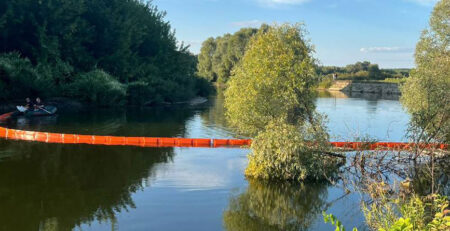
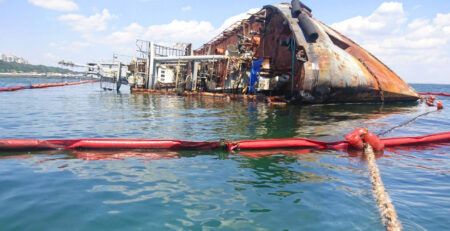
- Containment: Rapid restriction of oil slick spread using boom barriers.
- Oil Recovery: Mechanical and physicochemical extraction of oil products from the water surface.
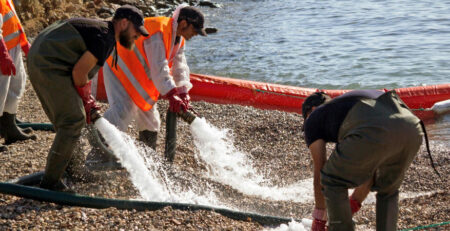
- Consequence Elimination: Further cleaning of the water area and reclamation of the shoreline in case of contamination.
3. Technical Means and Methods of Elimination
Mechanical Collection and Specialized Fleet
The mechanical method is the primary means of cleaning the water area from oil:
- Open Sea: Specialized oil recovery vessel “Svetlomor” (operates in waves up to 2 m, capacity up to 400 m³/h). In major accidents, non-specialized vessels with mounted devices are involved.
- Shallow Waters and Ports: Adhesion oil skimmers — skimmers.
Boom Barriers
Under favorable weather conditions, the use of booms and oil skimmers allows the collection of up to 70–80% of spilled oil products.
- Design Types: “Hite Sprint,” “Bulkhead,” “Sentinel,” “Shargadian,” “Warden Fence Booms,” “Minipack/Maxipack.”
- Scale of Application: During the “Amoco Cadiz” tanker accident, 11 km of “Sykore-11” type booms were required.
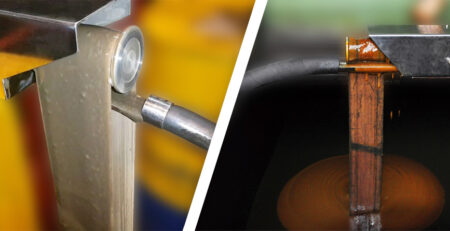
- Prospective Developments: Sorbent booms (produced in Ukraine, Poland, Russia), undergoing testing for open sea conditions.
Chemical Agents (Dispersants)
The use of chemical agents (Agma, Ameroid, Finasol, Corexit) is subject to strict environmental restrictions due to their toxicity. However, considering the presence of a deep-water hydrogen sulfide zone in the Black Sea, the feasibility of their targeted application in remote open sea areas is being studied.
Sorbent Materials and Biotechnologies
Sorbents are classified by origin and functional properties:
| Type of Sorbents | Materials and Preparations | Application Features |
|---|---|---|
| Inorganic | Perlite, vermiculite, high-porosity clays | High absorbency, but clays quickly sink, leaving oil in the environment. |
| Organic | Straw, peat, sawdust, cellulose fibers, corn cobs | Availability, requires collection and subsequent disposal. |
| Synthetic | Foam, polyurethane | High sorption capacity, complex disposal. |
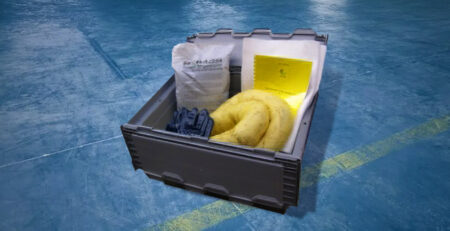
| Innovative (Biosorbents) | Preparation “Econadin” (LLC “MARSOFT”, Odessa) | Contains cultures of microorganism destructors. No collection and disposal required — biodegradation occurs in the natural environment. |
Geography of Global Sorbent Production
More than 300 companies worldwide produce sorbents:
- Ukraine: “Econadin” (biosorbent).
- United Kingdom: “Conwed,” “Norsopol,” “Sosol,” “Dresser-Dri,” “Fiber Pearl,” “Finsor,” “Oil Snare.”
- USA: “Primesorb.”
- France: “Turbosorb,” “Powersorb.”
- Canada: “Pitsorb.”
- Belarus: “Lesorb,” “Mukat-4.”
- Russia: “IMP-3,” “BTI-1,” “Eco DS-1,” “Lesorb,” “Sorboil.”
4. Response Strategy and International Cooperation
To effectively protect the water area, the implementation of a set of organizational and technical measures is necessary:
- Multi-scenario Planning: Development of LARN scenarios considering spill volumes, weather conditions, and non-reducible sorbent reserves in ports.
- Coordination Infrastructure: Operational management in open sea is carried out by the Marine Regional Rescue Coordination Center (Odessa) of the Ministry of Emergency Situations of Ukraine.
- Specialized Companies: Creation of large service structures analogous to international experience (“Ecoshelf,” Russia; “Vaikoma,” United Kingdom).
- International Cooperation: Involvement of Black Sea region countries within the framework of the “Strategic Action Plan for the Rehabilitation and Protection of the Black Sea” and interaction with the Advisory Group (Varna).
Key Task: Accelerating the adoption of the National Action Plan and the interagency LARN program for comprehensive protection of the Black Sea basin.
List of references
- Абрамян О.А., Брюм А.И., Иванов В.Г. Главные морские порты: Одесса, Ильичевск, Южный. -Одесса : : Маяк, 1993-336с.
- Аренс В., Гридин О., Гридин А., Семь раз отмерь. Рекламные иллюзии и реальные перспективы применения нефтяных сорбентов.
- Герлах С.А. — Смит А. Загрязнение морей. Диагноз и терапия. Л.»Гидрометиздат». 1985 240с.
- Кожанова Г.А., Соловьев В.И., Гудзенко Т.В., Губанов В.В. Сорбенты и биопреператы для ликвидации нефтяного загрязнения моря / Экологические проблемы Чорного моря.- Одесса: ОЦНТИ, 2001. — С.287-293.
- Кожанова Г.А., Соловйов В.І., Гудзенко Т.В., Беляєва Т.О., Бобрєшова Н.С., Сьоміна Н.В. Метод ліквідації нафтового забруднення в акваторії портів із застосуванням нового біопрепарату «Еконадін». / Вісник Одеського національного університету. Біологія. -2001. -Том 6, випуск 2.- С.1154-157.
- Охрана окружающей среды на морском транспорте / Сборник научных статей, М. , В/О «Мортехинформреклама», 1990.
- Нельсон — СмитА. Загрязнение моря нефтью. Л .»Гидрометиздат». 1973 124с.
- Правила ведения работ по очистке загрязненных акваторий портов РД 31.04.01-90. М.:»Мортехинформреклама» 1991 50с.
- Соловьев В.И., Губанов В.В., Кожанова Г.А., Гудзенко Т.В., Семина Н.В. Применение сорбирующих бонов для ликвидации и профилактики нефтяного загрязнения / Экологические проблемы Черного моря.- Одесса: ОЦНТЭИ, 2002, — С. 203-205.
- Стратегічний План Дій щодо відтворення та захисту Чорного моря. 1996 21с.
- Цыкало А.Л., Писаревский И.А. Компьютерное моделирование распространения нефти в море при ее разливах и утечках / Экологические проблемы Черного моря.- Одесса: ОЦНТЭИ, 1999. — С. 169-173.
- Шувалов А.Р., Цыкало А.Л. Черное море: Правовые вопросы безопасности перевозок опасных грузов по интермодальным коридорам / Экологические проблемы Черного моря.- Одесса: ОЦНТ+ЭИ, 1999. — С.32-35.