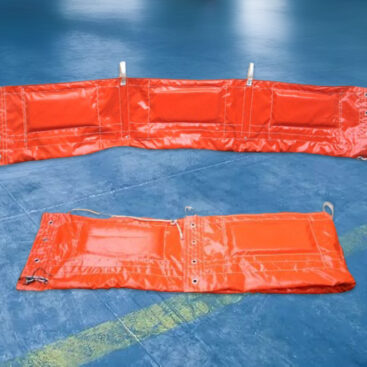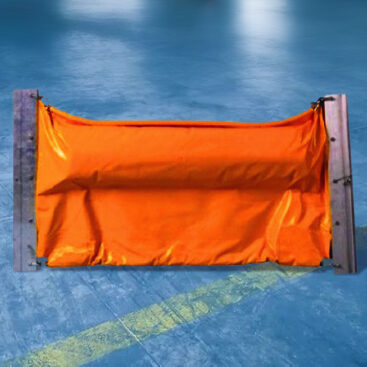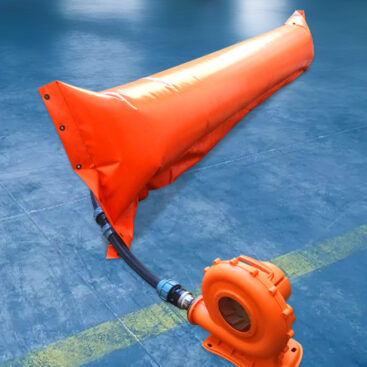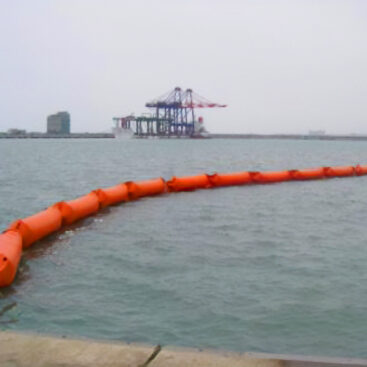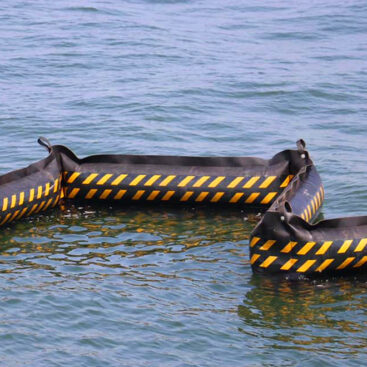


ECONAD Floating Debris Interception Barriers are heavy-duty floating systems designed to intercept, contain and redirect large volumes of floating debris in rivers, reservoirs, lakes and other water bodies.
The barriers can be used to control floating waste, vegetation, logs, water hyacinth and other debris before it reaches water intakes, hydropower facilities, dams, ports or environmentally sensitive areas.
Different barrier configurations are available depending on the expected debris load, water conditions and project requirements.
ECONAD Debris Interception Barriers can be used for:
- Floating waste and plastic collection
- River and waterway debris control
- Protection of hydropower facilities
- Water intake protection
- Dam and reservoir protection
- Control of floating vegetation and water hyacinth
- Log and timber interception
- Ice management
- Fish guidance systems
- Protection of bridges and other water infrastructure
- Deflection of floating debris towards designated collection areas
- Environmental protection of rivers and lakes
The system can be configured either to retain debris within a controlled area or to redirect it towards a collection and removal point.
The barriers are designed for locations exposed to significant accumulations of floating material.
Depending on the project, the system can incorporate:
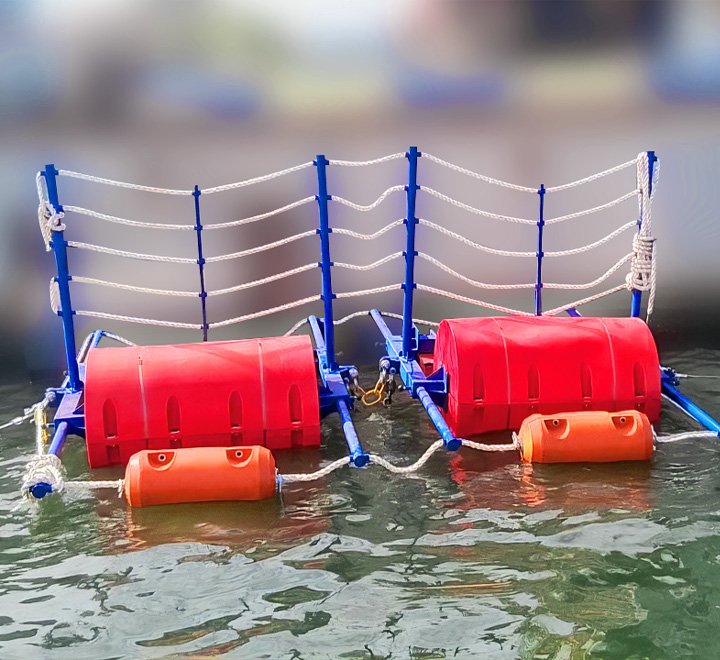
- High-density polyethylene components
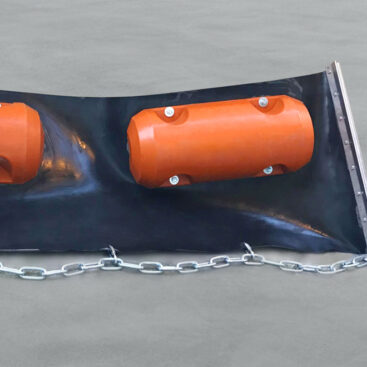
- Rotomoulded floats
- Rigid structural sections
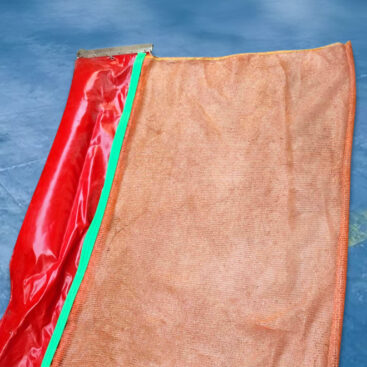
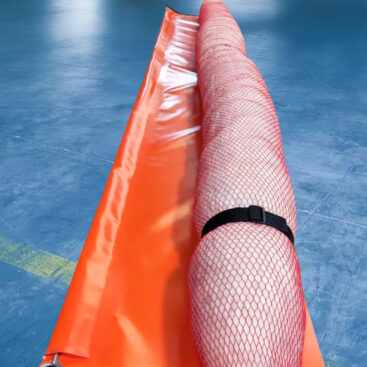
- Submerged screens
- Flexible nets
- Reinforced connection systems
- Mooring and anchoring equipment
The construction is selected according to the expected environmental loads and type of intercepted material.
Standard ECONAD barriers are typically manufactured in 3-metre and 6-metre sections.
The modular design simplifies:
- Transportation
- Assembly
- Installation
- Replacement of individual sections
- Modification of the barrier configuration
- Extension of the protection line
Individual modules can be connected to create barriers of different lengths and layouts depending on the dimensions of the protected area.
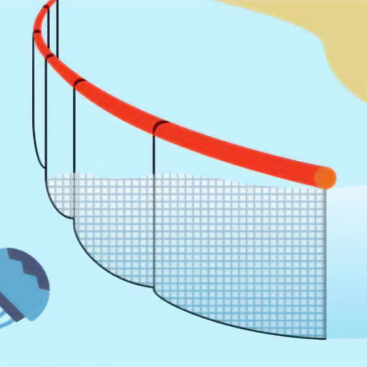
For applications requiring protection below the water surface, the floating barrier can be equipped with submerged screens or nets.
Rigid screen sections can be manufactured with depths of up to approximately 3 metres.
For greater protection depths, hybrid configurations can combine rigid barrier elements with flexible nets or screens extending further down the water column and, where required, towards the river or lake bed.
This allows the barrier to intercept both floating and partially submerged debris.
In many applications, completely retaining debris across a river or waterway is not the most efficient solution.
The barrier can therefore be installed at an angle to the water flow, allowing floating debris to be redirected towards:
- Collection points
- Debris removal platforms
- Shore-based collection areas
- Mechanical removal systems
- Designated maintenance zones
This approach can simplify continuous debris management while helping maintain the required water flow.
Large accumulations of water hyacinth and other floating vegetation can obstruct waterways, restrict navigation and interfere with water intake and hydropower operations.
ECONAD barriers can be configured to intercept and concentrate floating vegetation in designated areas where it can be mechanically removed.
Special barrier configurations can also be developed for use in cold climates.
The system can assist with managing moving ice and supporting the formation of a more stable upstream ice cover, helping reduce the movement of larger ice masses towards protected infrastructure.
The appropriate configuration depends on local temperatures, current velocity, expected ice conditions and structural loads.
The barrier can also be adapted for applications requiring controlled movement of fish and other aquatic species.
Special screen and barrier configurations can be developed to guide aquatic life away from:
- Water intakes
- Turbines
- Industrial facilities
- Restricted areas
- Other potentially hazardous zones
The required screen configuration should be selected according to the target species and site conditions.
Depending on the barrier configuration and operational requirements, the system can incorporate additional access features for inspection and maintenance.
Options may include:
- Personnel walkways
- Maintenance platforms
- Boat access points
- Debris collection areas
- Equipment access sections
These features can simplify routine inspection, cleaning and removal of accumulated debris.
Every debris interception project has different hydraulic, environmental and operational conditions.
ECONAD can develop a project-specific barrier system based on:
- Required protection length
- Water depth
- Current velocity
- Water-level variation
- Wave conditions
- Type and volume of expected debris
- Size of floating objects
- Required submerged screen depth
- Ice conditions
- Existing structures
- Available anchoring points
- Required debris collection method
- Transportation and installation limitations
Based on this information, the appropriate barrier dimensions, float configuration, structural system, submerged screen and anchoring arrangement can be selected.
- High Debris Capacity: Designed to intercept substantial volumes of floating waste, vegetation and other debris.
- Modular Construction: Standard sections can be connected to create barriers of different lengths and configurations.
- Flexible Protection Depth: Rigid screens and flexible nets allow the system to provide both surface and submerged protection.
- Multiple Applications: The system can be adapted for debris interception, debris deflection, vegetation control, fish guidance and ice management.
- Durable Materials: HDPE and rotomoulded components provide reliable performance in demanding freshwater and marine environments.
- Maintenance Access Options: Walkways and access systems can be incorporated where regular inspection and debris removal are required.
- Custom Engineering: Barrier dimensions, structural configuration, screen depth and anchoring can be adapted to specific site conditions.
Debris Interception Solutions for Water Infrastructure
ECONAD develops floating debris interception systems for rivers, reservoirs, hydropower facilities, water intakes, dams and other critical water infrastructure.
Contact us for:
- Preliminary project assessment
- Selection of the appropriate barrier configuration
- Debris load assessment
- Submerged screen selection
- Anchoring and mooring recommendations
- Fish guidance configurations
- Ice-control solutions
- Custom manufacturing
- Technical consultation
- Commercial quotation
Send us information about the required barrier length, water depth, current velocity and expected type and volume of debris to receive a suitable system configuration.