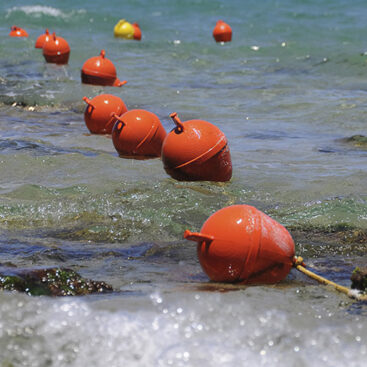


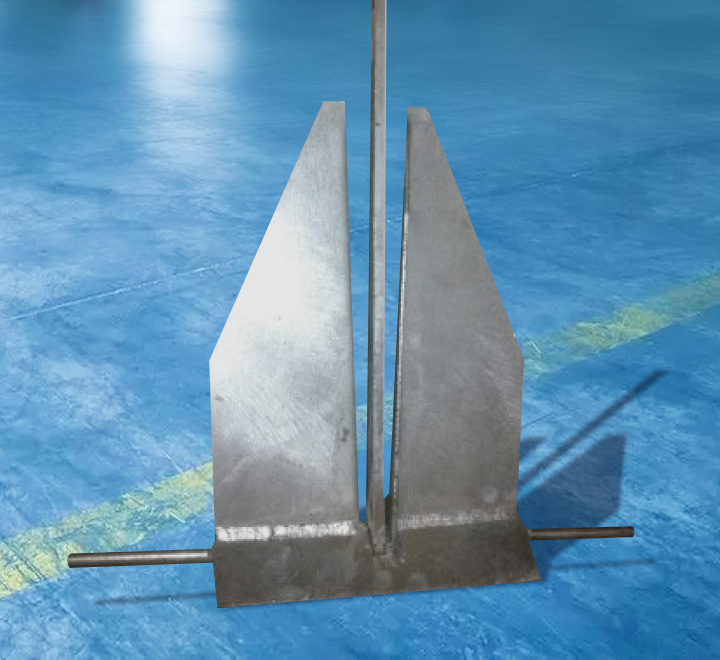
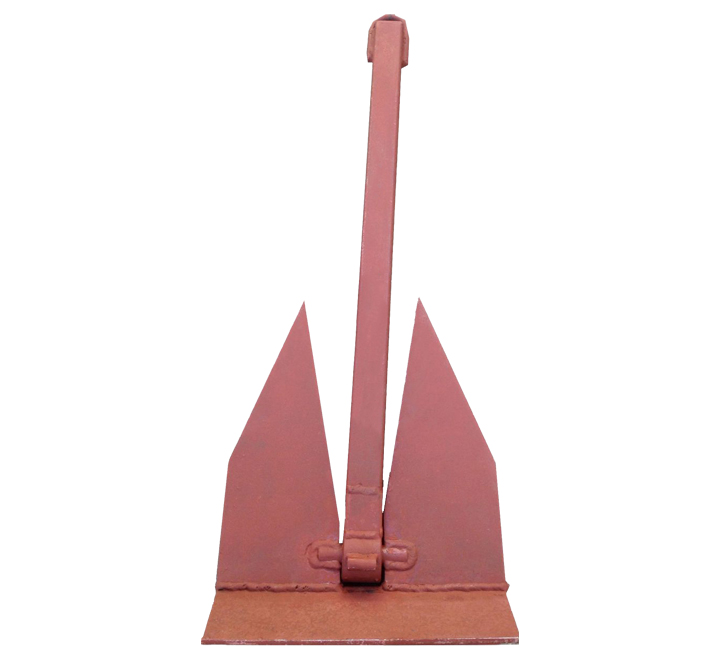
ECONAD Anchors are designed for securing buoys, floating barriers and other marine equipment in the required position.
The anchor is connected to the floating structure by an anchor chain or cable and transfers the mooring load to the seabed. Different anchor configurations can be selected depending on the type of equipment, seabed conditions and required holding capacity.
Danforth-Type Anchors
ECONAD supplies Danforth-type anchors designed to provide high holding power with relatively low anchor weight.
The anchor features long pivoting flukes that penetrate the seabed and develop resistance against horizontal pulling loads.
This type of anchor is particularly suitable for:
- Sand
- Silt
- Fine gravel
- Other relatively soft seabed conditions
The steel construction can be protected against corrosion by hot-dip galvanizing, making the anchor suitable for use in marine and freshwater environments.
ECONAD anchors can be used for:
- Navigation buoys
- Marker buoys
- Oil containment booms
- Floating debris barriers
- Silt curtains
- Floating security barriers
- Temporary floating structures
- Marine construction equipment
- Environmental protection systems
The geometry of the anchor allows the flukes to penetrate deeply into suitable seabed material as the mooring line is tensioned.
This provides a high holding force relative to the anchor weight and helps maintain the connected floating equipment in the required position.
Depending on the model and seabed conditions, the holding force can reach up to approximately 50 kg per kilogram of anchor weight.
The anchor incorporates a simple and reliable mechanical design suitable for marine operations.
Its elongated structural elements help maintain the correct orientation during loading and reduce the possibility of the anchor rolling onto its side.
The pivoting flukes are designed to penetrate the seabed when horizontal load is applied through the anchor chain or cable.
Anchors can be manufactured from steel and supplied with hot-dip galvanized protection for improved resistance to corrosion.
The appropriate material and surface protection can be selected according to the operating environment and project requirements.
The required anchor size and mooring arrangement depend on the characteristics of the floating equipment and the environmental conditions at the installation site.
When selecting an anchoring system, the following parameters should be considered:
- Type and size of floating equipment
- Required holding force
- Water depth
- Current velocity
- Wave conditions
- Wind loads
- Seabed type
- Length and type of anchor chain or cable
- Permanent or temporary installation
ECONAD can assist with the selection of suitable anchors and associated mooring components according to the specific project requirements.
- High Holding Power: The anchor geometry provides effective resistance to horizontal loads in suitable seabed conditions.
- Compact and Lightweight Design: High holding capacity can be achieved without requiring excessively heavy anchoring equipment.
- Simple Construction: The robust mechanical design provides reliable operation and straightforward handling.
- Corrosion Protection: Hot-dip galvanized versions are available for prolonged operation in marine and freshwater environments.
- Suitable for Different Floating Systems: Anchors can be used with buoys, booms, floating barriers, silt curtains and other marine equipment.
- Complete Mooring Configuration: Anchors can be supplied together with chains, cables, shackles and other components required for a complete mooring system.
Anchoring Solutions for Your Project
ECONAD can help select the appropriate anchor and mooring configuration according to the floating equipment and site conditions.
Contact us for:
- Anchor selection
- Mooring system configuration
- Anchor chain and cable selection
- Technical consultation
- Custom anchoring solutions
- Commercial quotation
Send us information about the floating equipment, water depth, seabed conditions and expected environmental loads to receive a suitable anchoring configuration.
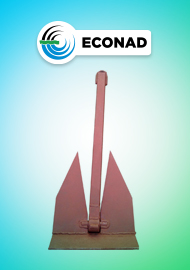
| Spindle length, mm. | 200 (booms) |
| Span of the horns, mm. | 306 |
| Weight, kg | 10-12 |
| Drainage force | Up to 50 kg of drainage force per kg of anchor |
| Material | Steel Grade 3 (Model AN3) Galvanized Steel (Model AN2) |